Written by Alexandar Krob, Plant Health Foreperson – Athens, Georgia

A few years ago, Alex began working on a major water management improvement project at our Bailey Innovations® site in Georgia. His goal was to reduce runoff, improve pond health, and create more sustainable water systems across the farm. This summer, after years of planning, planting, and problem-solving, the results are finally visible. Lush plantings, cleaner water, and thriving ecosystems. With the successful completion of this project, we asked Alex to share what he’s learned along the way.
Protecting Our Most Valuable Resource: Clean Water in Horticulture
In horticulture, we often say that water management is the most important thing we do. Usually, we mean how we water our crops, but the water that leaves the crop is just as important. Runoff can carry nutrients, herbicides, and heavy metals that pollute ponds and waterways, turning clear, healthy reservoirs into algae-filled, hard-to-manage systems.
A Pond with a History
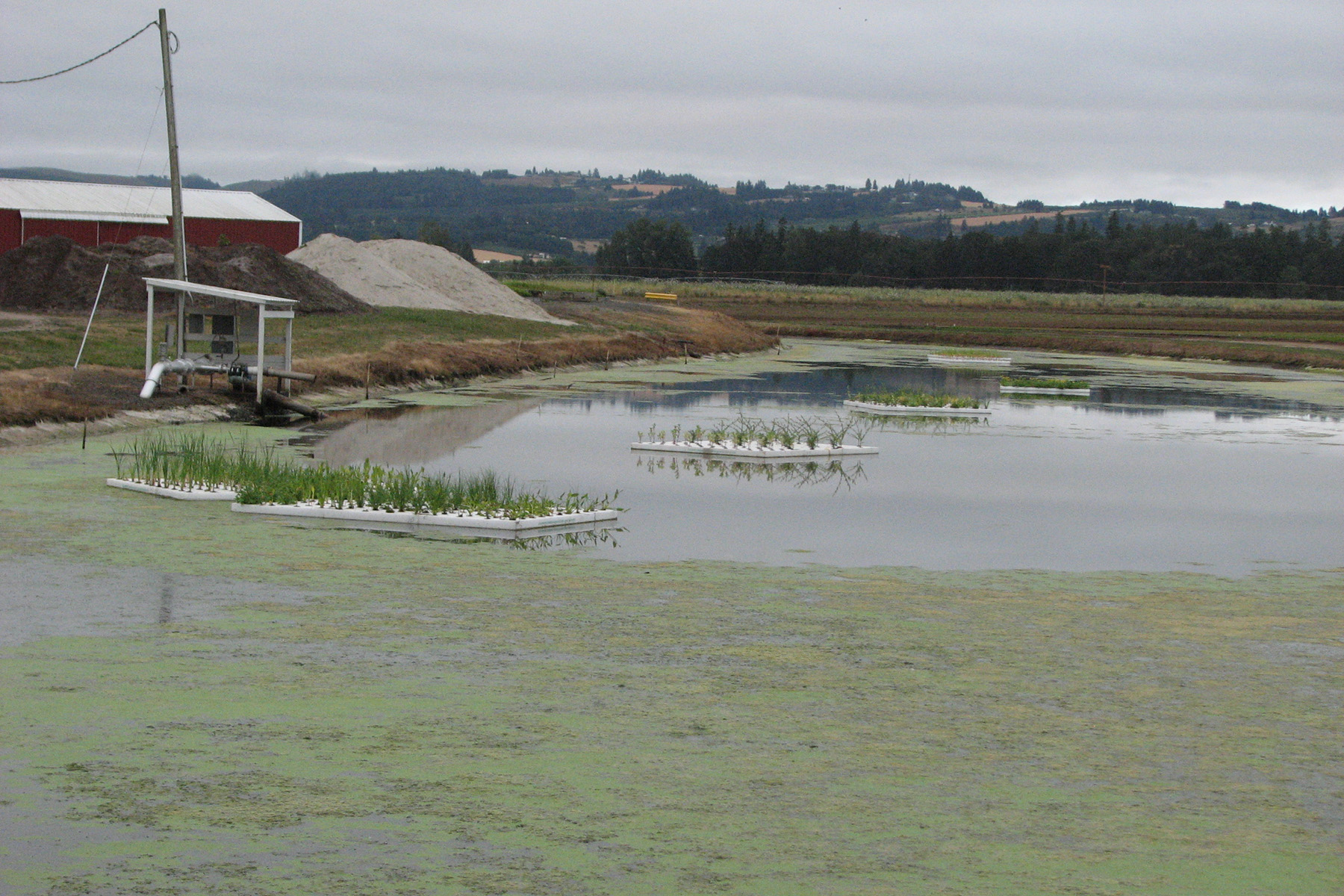
Our growing site in Athens, Georgia, has been home to nursery production for decades. The irrigation pond, built in the 1980s, has collected years of runoff from nursery operations. When we tested the sediment in 2022, we found high phosphorus levels, a common issue in agricultural ponds. Over time, phosphorus from fertilizers settles at the bottom and can be released back into the water depending on pH and temperature. This nutrient release fuels algae growth, which can cause water chemistry swings, fish deaths, and unpleasant odors.
Until recently, the pond had never been dredged, so algae blooms were a regular battle. Addressing this buildup became a key focus in improving our water quality.
Tackling Herbicides and Heavy Metals
Herbicide residues are another concern. While preemergent herbicides are vital tools for weed control, they can move into ponds during heavy rains or through overapplication. If that contaminated water is reused for irrigation, it can harm crops. To prevent this, we test our irrigation ponds three times a year for over 300 pesticide residues through an independent lab.
Heavy metals such as copper, lead, and arsenic can also build up from natural deposits, fertilizers, or old infrastructure. These metals persist for years and can pose risks to both the environment and human health. Regular monitoring helps us understand what’s in our water and how to manage it responsibly.
Infrastructure and Innovation
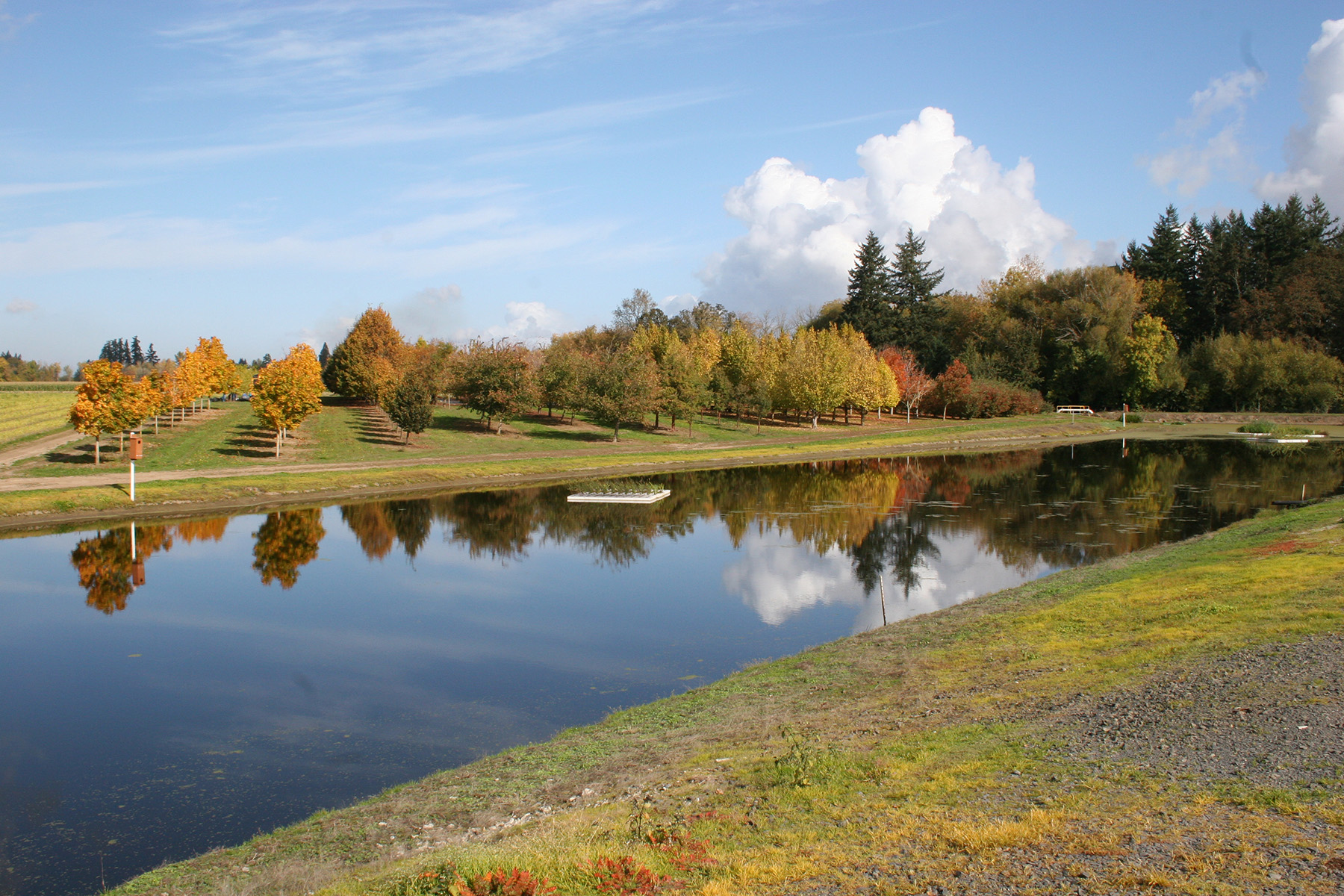
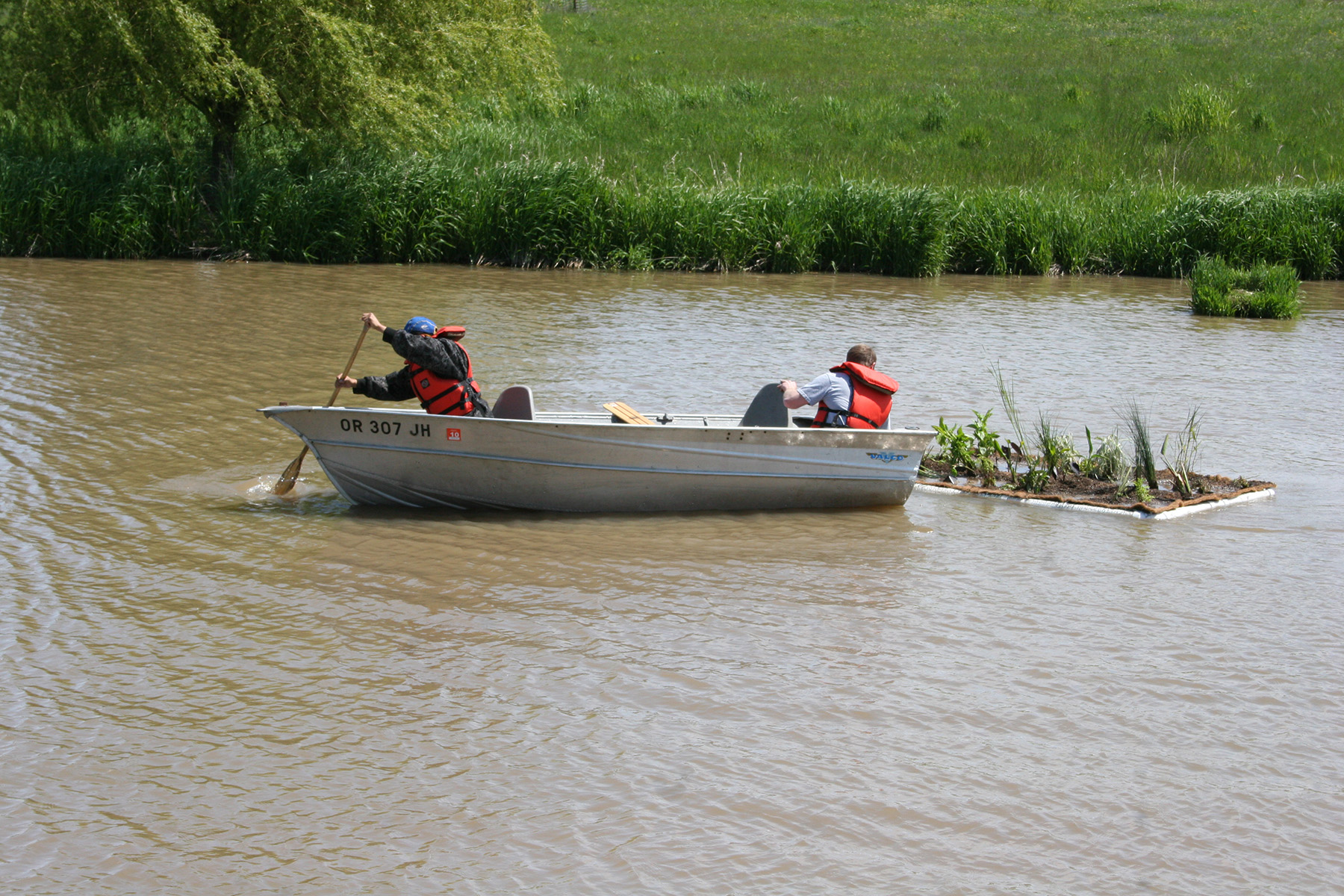
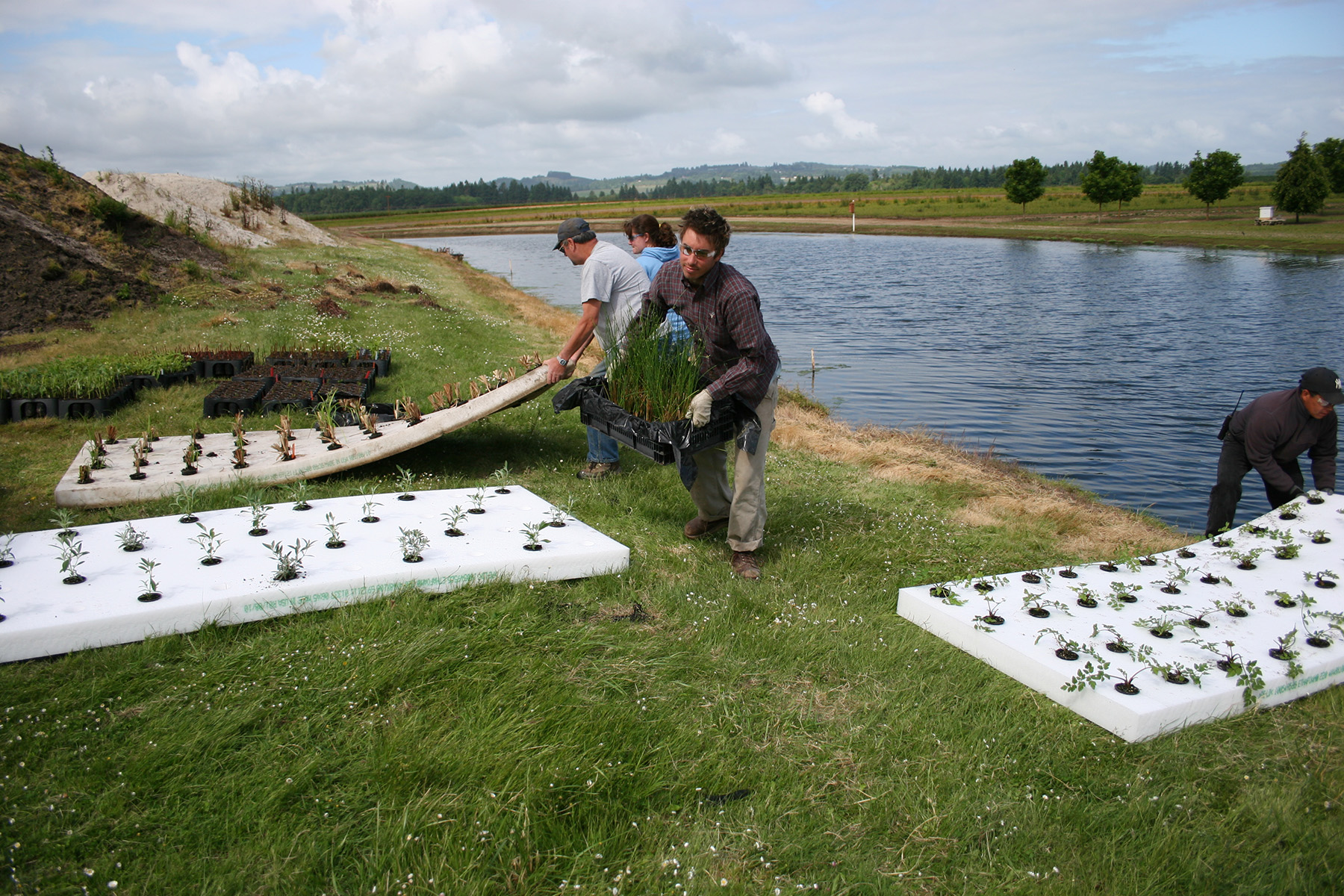
To better manage runoff, we installed a forebay pond – a smaller pond that captures runoff before it reaches the main irrigation pond. Here, sediment settles out, keeping the larger pond cleaner and reducing long-term maintenance costs. The forebay is designed for easy access so that accumulated material can be dredged periodically. We also planted dense vegetation and installed a floating treatment wetland, a floating island of plants that naturally remove nutrients and metals from the water.
Beyond the ponds, we looked across the farm for ways to slow and filter surface water. Rain gardens and vegetated waterways now help trap sediment and nutrients before they ever reach the ponds. These areas also provide habitat for pollinators, adding ecological value to our farm landscape.
Establishing these plantings has been a learning process. Weed pressure, drought, and construction disruptions have all posed challenges. But each setback helped us identify which native and ornamental species thrive with minimal care and still provide strong environmental benefits. This fall, we’re expanding our efforts with more native wildflowers, grasses, and Bailey Nurseries cultivars like First Editions® Fiber Optics® Buttonbush, First Editions® Sapphire Surf™ Bluebeard, and First Editions® Queen Bee® Vitex.
We’re also adding phosphorus filters and activated carbon systems at pond inlets to capture contaminants before they can enter the water.

A Commitment to Sustainable Water
Clean water is essential for healthy plants, healthy ecosystems, and sustainable operations. Contaminated irrigation water can lead to algae blooms, crop damage, and long-term maintenance issues. By investing in infrastructure like forebay ponds, vegetation buffers, and filtration systems, we’re protecting one of our most valuable resources.
The Bailey Sustainability Team continues to look for opportunities to apply these practices across all nursery locations. While our system isn’t perfect, the improvements made at Bailey Innovations® show what’s possible when we take a proactive, science-driven approach to water management.
